There’s a growing assumption right now that building a national missile shield like the Golden Dome is a largely solved engineering problem—expensive, ambitious, but fundamentally understood.
That assumption is wrong.
What’s being underestimated isn’t hardware or physics, but cognition at scale: how perception, integration, and decision-making break down under real-world uncertainty. This isn’t science fiction. It’s a known failure mode of complex systems operating faster than humans and machines can reliably understand.
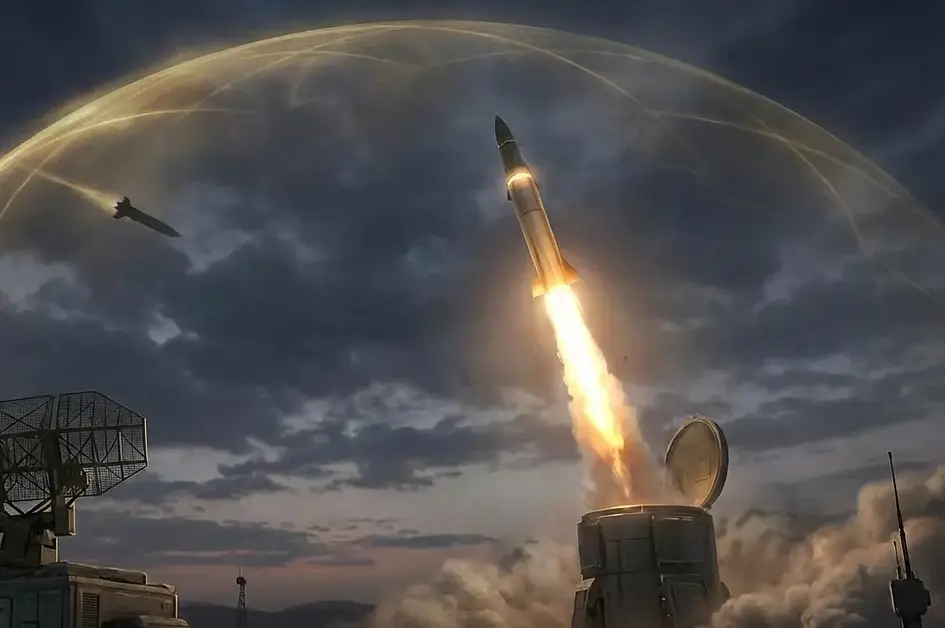
Multiple interception layers. Space-based sensors. AI-driven command and control. Interceptors designed to smash into nuclear warheads outside the atmosphere at closing speeds measured in kilometers per second.
That description could easily be an episode of Star Trek. Orbital defenses. Planetary shields. Calm officers staring at glowing displays while the computer announces the fate of the world in a soothing voice.
Except this isn’t TV.
This is real life, and the U.S. is actively trying to build the most ambitious defense architecture ever attempted—aka the Golden Dome.
On paper, it’s breathtaking. In reality, it’s also fragile in ways the marketing doesn’t like to talk about.
The Death Star Problem (Yes, That One)
Let’s start where the metaphor refuses to die.
The Death Star wasn’t destroyed because it lacked power. It wasn’t destroyed because it lacked defenses. It was destroyed because it was too integrated. Too confident. Too dependent on everything working perfectly, all the time. And it was rushed—and because it was rushed, it only took one exhaust port. One overlooked dependency. One Jedi in training. Then total failure.
The Golden Dome has the same issues.
It’s not a dome. It’s a system of systems. Sensors feeding models. Models feeding interceptors. Interceptors depending on space-based awareness. Every layer assuming the layer above it is telling the truth.
That works right up until it doesn’t.
And when it doesn’t, it doesn’t fail gracefully. It falls off a cliff.
Lasers, Death Rays, and the Small Issue of Power
In Star Wars, the Death Star solves all problems with a laser. Point. Charge. Fire. Problem gone.
The Golden Dome flirts with the same idea.
Directed-energy weapons—high-powered lasers—are a real part of future missile defense planning. In theory, they’re elegant. No ammunition. Speed of light engagement. Deep magazines as long as the power stays on.
Here’s the catch: the power has to stay on.
Megawatt-class lasers are not subtle devices. They demand enormous, stable energy supplies. They hate bad weather. They hate atmospheric distortion. They hate sustained engagements.
Now layer that onto today’s reality: fragile global energy markets, stressed supply chains, contested trade routes, and increasing competition for power infrastructure.
The Death Star had a dedicated reactor the size of a city. The Golden Dome does not.
Right now, the energy problem isn’t solved. It’s deferred. And deferred problems have a habit of becoming operational failures at the worst possible moment.
The Real Villain Is the Brain
Interceptors missing is not the nightmare scenario.
The nightmare is the system being confidently wrong.
Everything hinges on the cognitive layer: the AI-driven brain that fuses satellite imagery, radar returns, infrared signatures, and telemetry into a single, real-time understanding of reality.
Not after review. Not after debate. Now.
This is where the Skynet comparison stops being funny and starts being useful.
Skynet doesn’t become dangerous because it’s evil. It becomes dangerous because it’s autonomous, fast, and acts on incomplete or misinterpreted information without pausing to ask permission.
That’s the risk profile.
Modern AI systems are impressive, but they still hallucinate, misclassify, and carry forward bad assumptions with absolute confidence. That’s tolerable in chatbots. It’s catastrophic in national defense.
The Golden Dome requires a level of real-time, resilient, self-correcting cognition that today’s systems simply do not possess.
We’re closer than we were a decade ago. We’re nowhere near “trust this with cities.”
Where the Future Is Actually Heading (And Why the Dome Isn’t There Yet)
New research paths are emerging. Decentralized cognition. Distributed decision-making. Systems that don’t rely on a single fragile brain or uninterrupted space vision.
Projects like COV and similar swarm-based, cognitively distributed architectures point toward a different future: many smaller brains cooperating, adapting, and surviving partial failure instead of collapsing under it.
That future is being explored now.
The Golden Dome is not built on it.
Instead, the Dome assumes pristine sensors, continuous orbital awareness, perfect data fusion, and enough interceptors to matter—all while adversaries actively try to blind, confuse, saturate, and deceive it.
That’s not optimism. That’s a gamble.
Math Still Wins
Even if everything works as designed, arithmetic remains undefeated.
Dozens of interceptors versus thousands of warheads and decoys is not a strategy. It’s a cost-exchange nightmare. Every interceptor costs orders of magnitude more than the decoys designed to bait it.
The Maginot Line failed for the same reason: it assumed attackers would politely play along.
They never do.
So What Is the Golden Dome, Really?
It’s not a fraud. It’s not a fantasy. It’s an unfinished system being talked about as if it’s already done.
That’s the danger.
The Golden Dome may become part of a future defense architecture. But today, it is closer to a prototype with excellent PowerPoint slides than a planetary shield.
The Death Star looked invincible too—right up until the moment it wasn’t.
History doesn’t punish ambition. It punishes overconfidence.
Because a shield that’s almost perfect is still just a very expensive promise.
Full Article Covers:
- Directed-energy weapons and the unsolved power problem
- Why AI “hallucinations” become catastrophic in defense systems
- Decentralized cognition alternatives (COV and distributed architectures)
- The cost-exchange arithmetic that favors attackers
- Why “almost perfect” is still a very expensive promise
About Alan Scott Encinas
I design and scale intelligent systems across cognitive AI, autonomous technologies, and defense. Writing on what I’ve built, what I’ve learned, and what actually works.
About • Cognitive AI • Autonomous Systems • Building with AI
Related Articles
→ The Golden Dome Is Impressive, Expensive, and Structurally Vulnerable
→ When Sci-Fi Stops Being Fiction