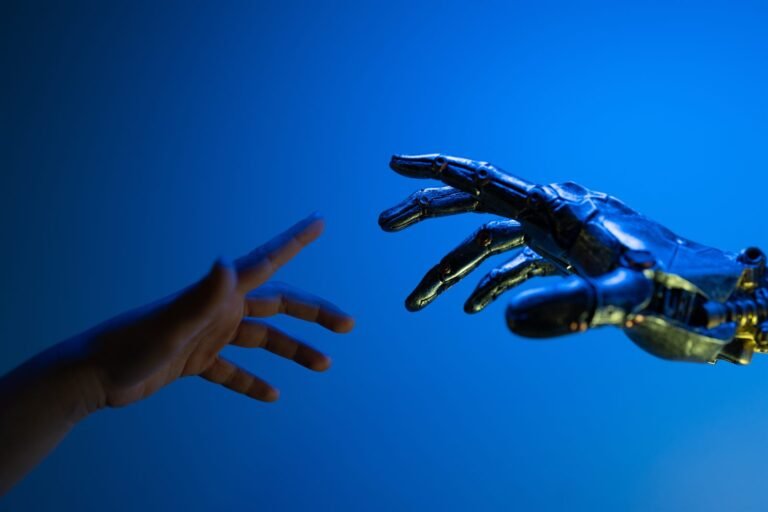
Robot skin can feel pain now. The hard part is teaching it to think.
We spent decades imagining a limb you don't just wear, but feel. Like Luke's hand. This year a lab built the part that always seemed impossible: the wince.

How autonomous systems coordinate, adapt, and operate when the environment won’t cooperate. Drone autonomy, swarm coordination, navigation resilience, and designing systems that don’t fall apart when something fails.
We spent decades imagining a limb you don't just wear, but feel. Like Luke's hand. This year a lab built the part that always seemed impossible: the wince.
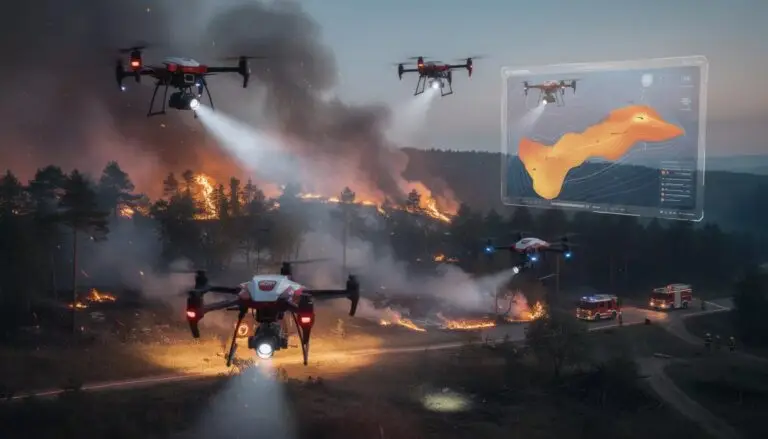
The commercial drone industry faces a critical scalability bottleneck: the "1:1 Ratio," where increasing fleet size linearly increases human cognitive load. COV—Cognitive Orchestration & Vision—is a novel architectural framework that decouples mission intent from flight execution, shifting the human role from "pilot" to "supervisor."
Years ago, I watched Prometheus and fixated on a small moment most people glossed over. Inside the alien structure, two spherical drones fly autonomously through dark, unknown corridors, scanning, mapping, and reconstructing the interior in real time. The scene wasn't flashy. It was practical. And it planted a thought that never quite faded: Why isn't this real yet?
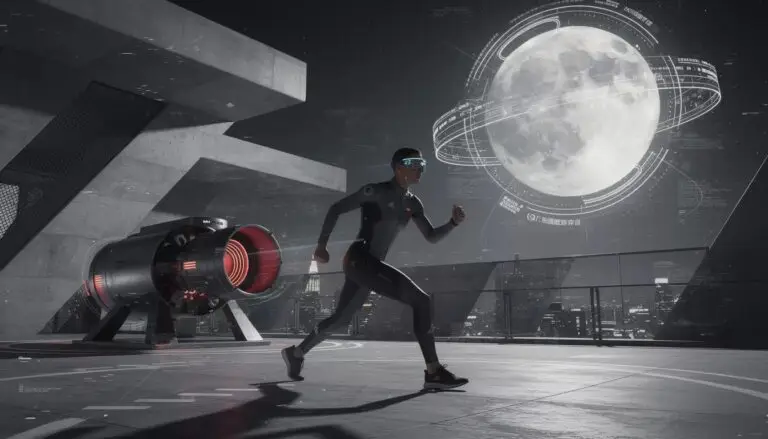
AI did not wait for permission to change aviation or space. It simply stepped in and started doing the work. In only a few months, we moved from talking about autonomous systems as distant possibilities to watching them fly fighter jets, navigate the darkest parts of the Moon, and run on hardware powerful enough to reshape the pace of innovation.
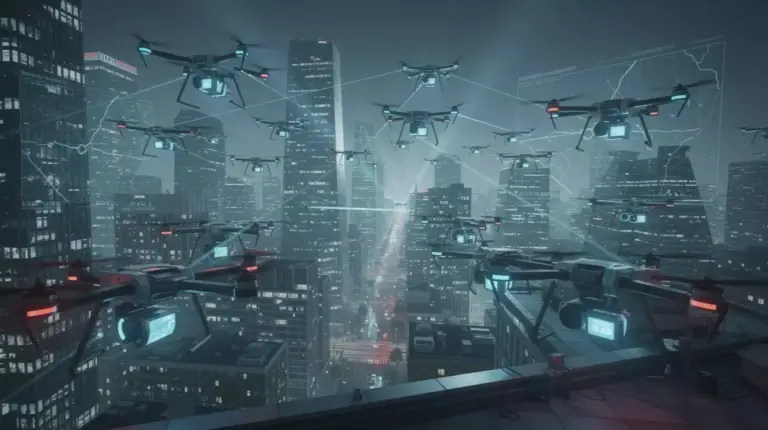
COV—Cognitive Orchestration & Vision—didn't emerge from speculative futurism. It emerged from a convergence of existing systems, peer-reviewed research, and a coordination problem that modern autonomy still hasn't solved. The bottleneck isn't perception or mobility. It's coordination under cognitive load.
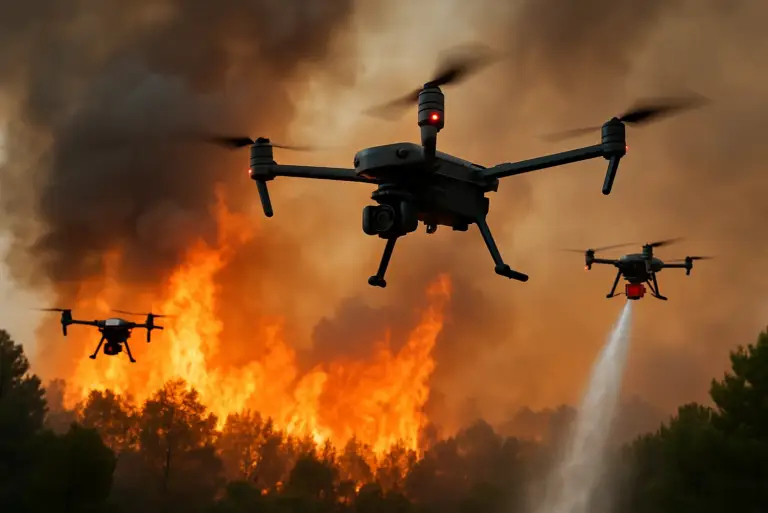
For the last decade the drone industry has chased better hardware, longer flight times, sharper cameras, and faster processors. That race is largely over. In 2025, the limiting factor in drone operations is no longer what drones can do—it's what humans can manage.
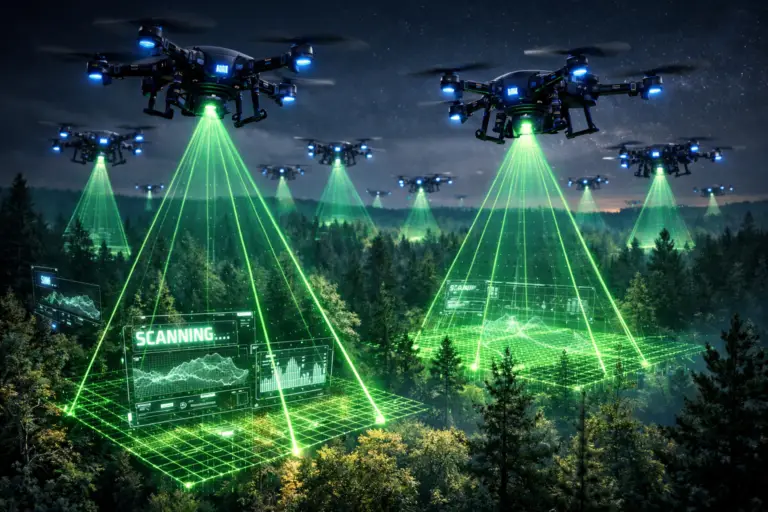
What people underestimate about multi-drone systems isn't flight—it's continuity. Drones don't fail dramatically most of the time. They drift, batteries dip, links degrade, one unit quietly peels off. Unless someone is watching closely, a hole opens in coverage. That's where most systems break.