Years ago, I watched Prometheus and fixated on a small moment most people glossed over. Inside the alien structure, two spherical drones are released. They fly autonomously through dark, unknown corridors, scanning, mapping, and reconstructing the interior in real time. X-rays. Geometry. A living 3D model of the unknown.
The scene wasn’t flashy. It was practical. Calm. Surgical.
And it planted a thought that never quite faded: Why isn’t this real yet?
At the time, it made sense that it wasn’t. The hardware was bulky. The computer was expensive. The coordination problem was unsolved. But fast-forward a decade and the constraints quietly disappeared. Drones became smaller, cheaper, smarter. Sensors improved. On-device inference became viable. AI stopped being a backend novelty and started living at the edge.
The fiction aged faster than expected.
The Second Spark: Reality Catches Up, Hard
The second inspiration came not from cinema, but from the real world specifically from what’s unfolding in Ukraine and Russia.
For the first time at scale, we’re watching drones used not as accessories, but as primary actors. Air. Sea. Surveillance. Strike. Counter-strike. Improvised systems evolving faster than doctrine can keep up.
What stood out wasn’t just the technology, it was the improvisation. Young operators, many with backgrounds in gaming and simulation, adapting faster than traditional military pipelines ever could. Single-drone pilots pushing systems to their limits.
That raised a different question.
If one human can effectively pilot one drone today, and AI pilots are coming soon, why are we still thinking in single-agent terms? Why stop at one?
From Control to Cognition
COV is my attempt to answer that question.
The leap isn’t about better joysticks or faster reflexes. It’s about moving from control to cognition. From piloting to orchestration.
Instead of one human managing one machine, COV assumes a human supervising intent while multiple autonomous agents execute, coordinate, adapt, and report semantically, not visually.
This is where cognitive systems matter.
A drone doesn’t need to stream raw video if it understands what it’s seeing. A fleet doesn’t need micromanagement if it can self-rebalance. A human doesn’t need to be overloaded if the system speaks in meaning instead of pixels.
That’s the connective tissue between my work in cognitive orchestration and COV. Vision-language models become the translator between reality and intent. Orchestration becomes the nervous system. Humans stay in the loop, but at the right altitude.
Why This Goes Beyond Drones
Once you see the pattern, the applications stop being niche.
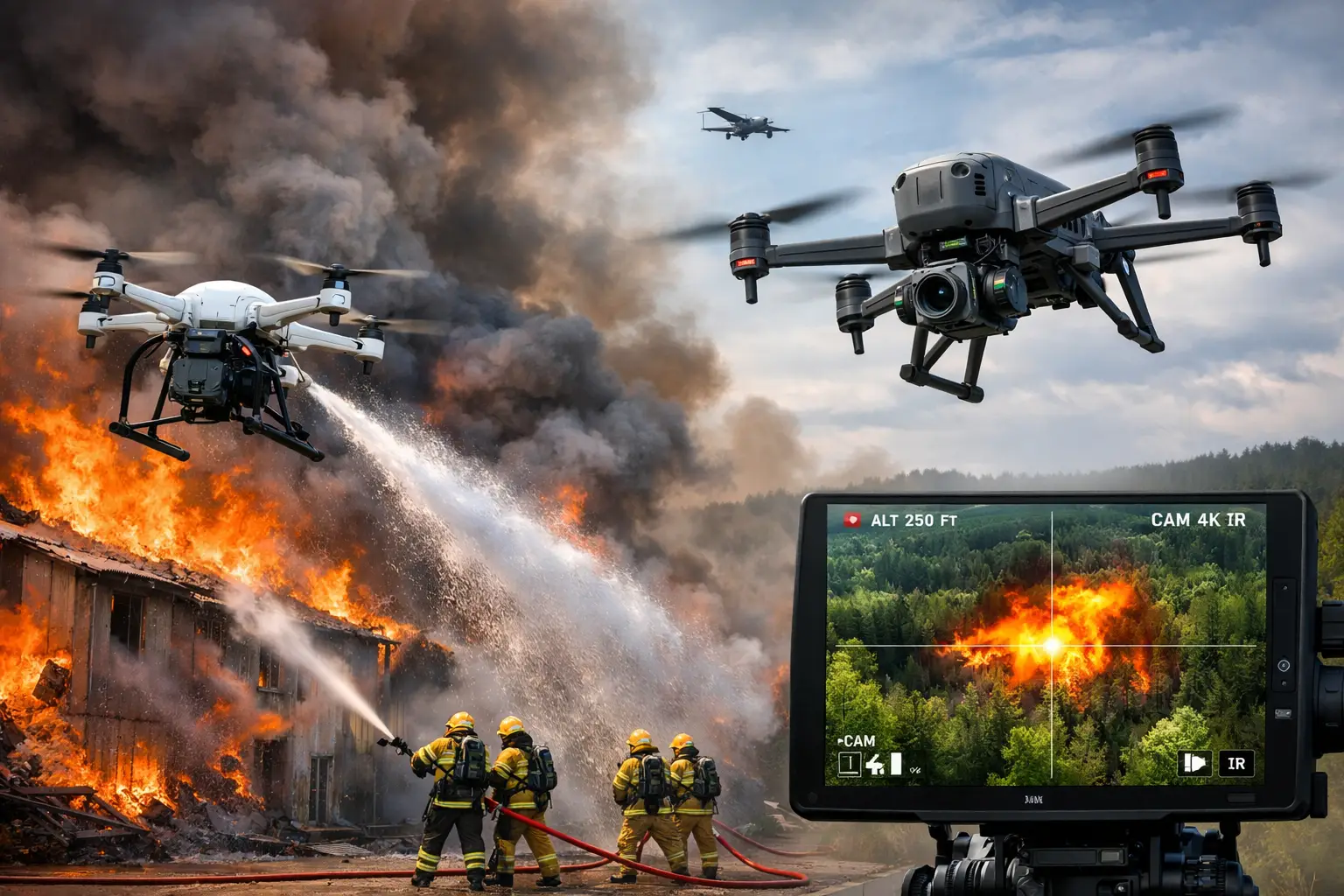
Firefighting in environments humans can’t enter. Archaeological exploration inside pyramids, collapsed cities, sealed chambers, places untouched for centuries because access was impossible. Infrastructure inspection in zero-visibility conditions. Planetary exploration where latency makes direct control useless.
And yes, space.
When communication delays stretch into minutes, autonomy isn’t optional. Cognitive orchestration isn’t a feature, it’s survival.
What used to require science fiction assumptions now fits inside modern engineering constraints.
The Real Shift
COV isn’t about replacing humans. It’s about finally letting machines do what they’re good at perception, coordination, and endurance so humans can do what they’re uniquely suited for: judgment, intent, ethics, and direction.
We spent years teaching machines to see. Now we’re teaching them to understand. The next step is teaching them to work together. That’s the step that turns tools into systems.
What once lived on a movie screen is now crossing into reality, not because imagination got bigger, but because the technology finally caught up.
This is the work. This is the moment. And this is only the beginning.
This Article Explores:
- How sci-fi (Prometheus) intersected with reality (Ukraine drone warfare)
- The shift from “one human, one drone” to orchestrated fleet cognition
- Why semantic reporting beats raw video streaming
- Applications beyond military: firefighting, archaeology, space exploration
- The real shift: machines doing perception, humans providing judgment
About Alan Scott Encinas
I design and scale intelligent systems across cognitive AI, autonomous technologies, and defense. Writing on what I’ve built, what I’ve learned, and what actually works.
About • Cognitive AI • Autonomous Systems • Building with AI
Related Articles
→ The Death of the Pilot: Why COV is the Future of Drones
→ Why We Already Have the Future of Robotics, But Can’t Use It