From Moon Craters to Martian Dust
How one project quietly led to another.
Every once in a while, you work on a project that leaves a mark long after you’ve pushed the final commit.
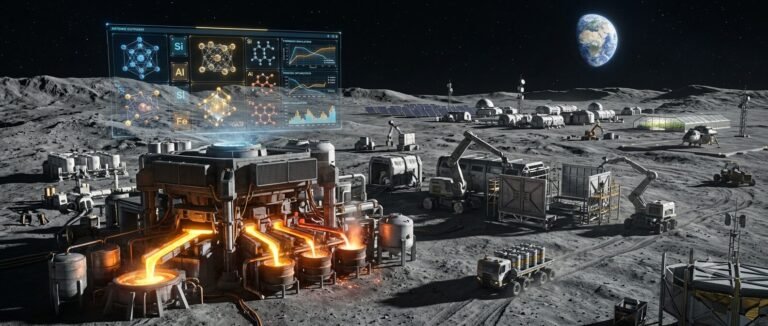
A few months ago, I wrapped up LunarSite, an end-to-end machine learning pipeline for lunar south pole landing site selection. Like every project I take on, it started with a technical objective. Build the models. Solve the problem. Learn something new.
What I didn’t expect was how much time I’d spend reading about the Moon itself. Landing zones. Permanently shadowed regions. Terrain. Illumination. Artemis. The engineering challenges behind returning humans to the lunar surface. Somewhere between writing code and reading research papers, the Moon stopped feeling like a distant object in the night sky and started feeling like a place.
Not long after, I found myself watching The Martian again. Years ago, I saw it as a survival movie. An astronaut stranded on an unforgiving planet, forced to grow food, recycle water, and improvise solutions just to stay alive long enough to be rescued.
Watching it this time felt different.
After spending months immersed in lunar exploration, I wasn’t focused on Mark Watney. I found myself paying attention to Mars. The atmosphere. The dust. The weather. The environment.
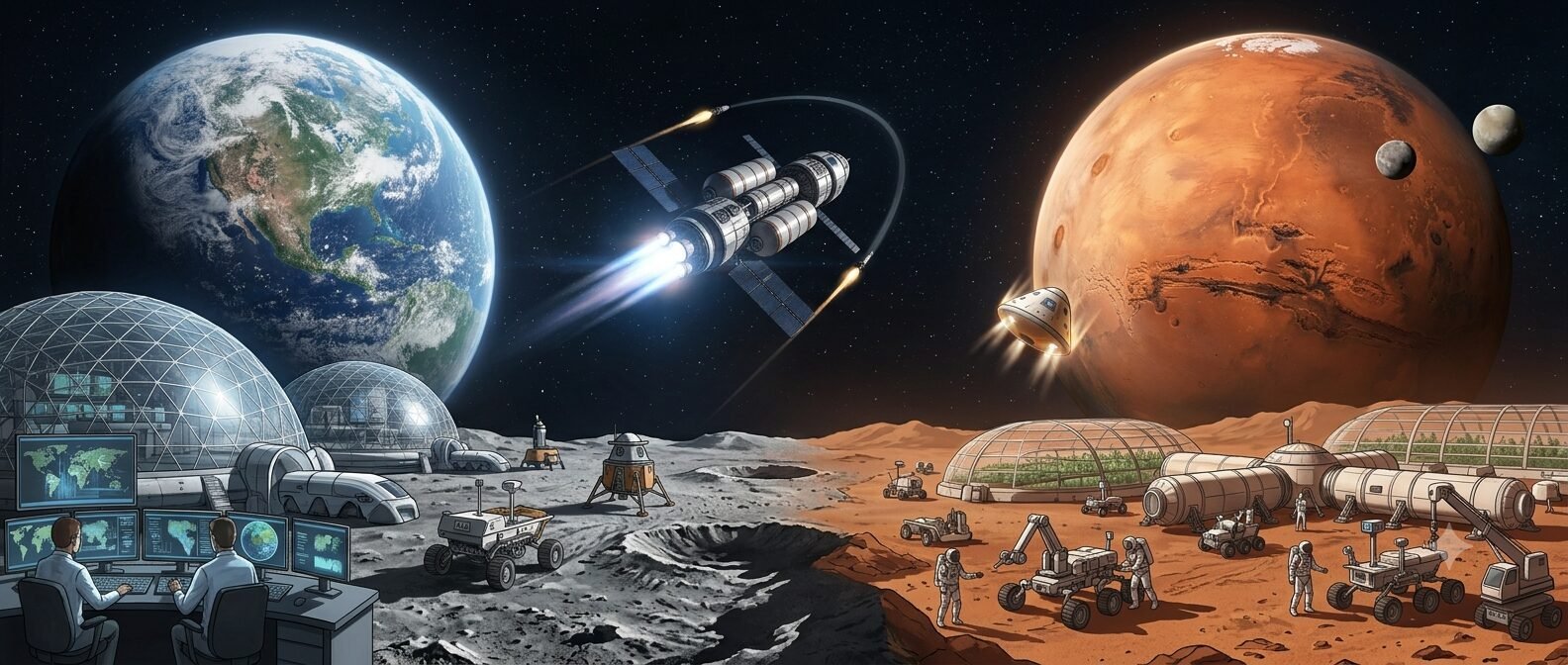
For the first time, Mars didn’t feel like a movie set. It felt like another engineering problem waiting to be understood.
That curiosity eventually led me to my next machine learning project, one centered around the Martian environment. I didn’t choose it because I already knew anything about the Red Planet. In fact, that was exactly the reason I chose it.
I’ve realized that’s become my approach to learning. I don’t pick projects because I’m an expert in the subject. I pick them because they force me to become a student.
Every dataset comes with a new discipline. Every model requires understanding a little more about the world it represents. Every project is an excuse to spend a few weeks or months borrowing the perspective of scientists, engineers, researchers, and experts who have spent years asking questions I never thought to ask.
Mars turned out to be far more interesting than the version most of us grow up with. It’s easy to think of it as a cold, empty desert painted red by iron oxide. The reality is far more dynamic. Mars has seasons. Its atmosphere, while only about one percent as dense as Earth’s, is constantly changing. Dust storms can grow so large they engulf the entire planet, altering temperatures and reducing sunlight for weeks. Atmospheric pressure shifts throughout the Martian year, influencing weather patterns and becoming a critical factor for everything from landing spacecraft to planning future human missions.
The more I learned, the more I realized that understanding Mars isn’t just about satisfying curiosity. Every pressure reading, every environmental measurement, and every weather model brings us one step closer to answering a much bigger question.
How do we live somewhere we’ve never lived before?
That’s what I enjoy most about projects like these. The machine learning is only part of the experience. The real reward is everything that happens around it.
You start reading papers you never imagined opening. You discover fields you didn’t know existed. You begin connecting ideas across engineering, science, history, and exploration. Eventually, what began as another technical exercise becomes something much bigger. It changes the way you see the world, or in this case, another world.
Looking back, I don’t think LunarSite was ever just about the Moon. And I don’t think this latest project was ever just about Mars. Together, they’ve reminded me that curiosity rarely appears all at once. More often, it’s built one question at a time.
One project leads to another. One problem opens the door to ten more. Before you realize it, you’ve gone from learning where humanity might safely land on the Moon to wondering how we’ll one day grow food, build habitats, predict weather, and create a future on a planet nearly 140 million miles away.
Maybe that’s the greatest return on investing time in difficult problems. You don’t just leave with better code or better models.
You leave seeing the universe a little differently.
What Comes Next
That project turned out to be the Mars Environmental Dynamics Analyzer (MEDA) Virtual Sensor Recovery competition.
MEDA is the environmental station aboard NASA’s Perseverance rover as it explores Jezero Crater. Every day, it’s collecting the data that transforms Mars from a distant red dot into a real place. Atmospheric pressure. Wind. Humidity. Air temperature. Ground temperature. Radiation. Dust.
The challenge sounds simple on paper: reconstruct missing atmospheric pressure readings using everything else the rover observed at the same moment. But the more I learned about it, the more I appreciated what that actually means.
There are no do-overs on Mars. If a sensor misses part of a Martian day, no one can walk over, recalibrate it, and collect the data again. Those moments are gone. The only way to recover that piece of the planet’s history is to understand the system well enough to infer what was missing.
That’s the kind of problem I enjoy. It’s not just about building another machine learning model. It’s about understanding the environment well enough that the model begins to make sense of it.
Over the next few weeks, I’ll be documenting that journey through a new Builder Journal series. I’ll share the experiments that worked, the assumptions that didn’t, the dead ends, the breakthroughs, and everything in between. Like every project I take on, the goal isn’t just to arrive at a solution. It’s to understand why the solution works in the first place.
LunarSite taught me to think about where humanity might one day land. Mars is teaching me what it will take to live there.
Frequently asked questions
What is MEDA on the Perseverance rover?
MEDA is the Mars Environmental Dynamics Analyzer, the environmental station aboard NASA’s Perseverance rover in Jezero Crater. It measures atmospheric pressure, wind, humidity, air and ground temperature, radiation and dust, and it has been recording since the rover landed in February 2021.
Why is Martian atmospheric pressure hard to predict?
It is several signals stacked on different clocks. An annual cycle driven by carbon dioxide freezing onto the poles and returning, a daily swing on top of that, and a strong dependence on how much dust is suspended in the atmosphere at the time. It is not a smooth curve you can interpolate across.
Why can’t a missing sensor reading just be re-measured?
There are no do-overs on Mars. Nobody can walk over to the rover, recalibrate an instrument and collect the data again. If a sensor misses part of a Martian day, that stretch of the planet’s atmospheric record is gone unless it can be reconstructed from what the other instruments observed at the same moment.
How do you go about choosing machine learning projects in a field you know nothing about?
Not knowing the field is the point rather than the problem. An unfamiliar domain forces you to learn the science behind the data instead of only the modeling, and the constraints of that domain usually turn out to be what shapes the solution. The alternative, only ever picking projects you already understand, means every project teaches you the same thing.
What is a sol?
A sol is one Martian day, about 24 hours and 39 minutes. Rover missions count time in sols from the landing date rather than in Earth days.
Recommended reading
- LunarSite: ML for Lunar South Pole Landing Site Selection · the project that started all of this, end to end.
- Building LunarSite: the director’s commentary · the decisions and dead ends behind that pipeline, including the negative result I published.
- When Sci-Fi Stops Being Fiction · on the gap between the future we watch and the one that already shipped.
- The Builder Journal · the running log of my live competitions, where the Mars series will appear.